English
 Español
 Русский
 عربي
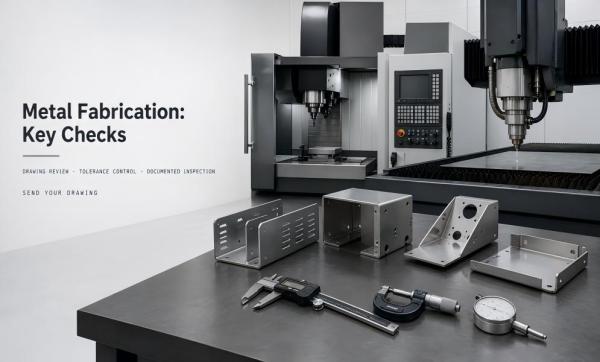
عربيMetal Fabrication: Key Checks Before You Order
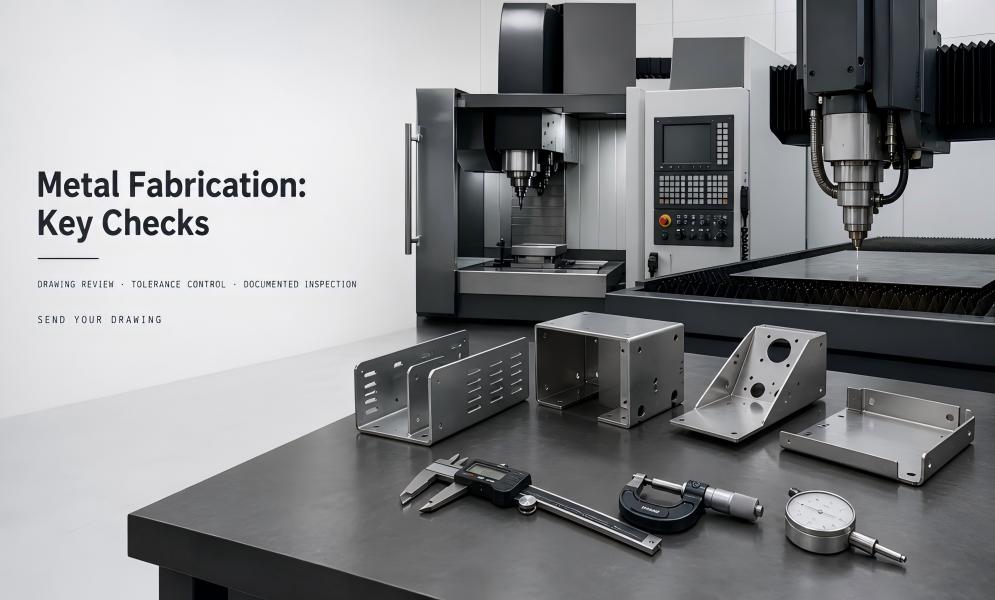
OEM precision metal fabrication from drawing. Laser cutting, bending & welding, tight tolerance, full QC, material certification for custom sheet metal parts.
Introduction
Metal fabrication projects rarely fail for lack of capability. They fail because a detail was left open — a tolerance nobody questioned, a finish that was assumed rather than specified, a material certificate that arrived after the parts did. For OEM buyers and project engineers, a short checklist applied before the first part is cut prevents most of the cost and delay that surfaces later.
Begin With the Drawing, Not the Price
A drawing that reads clearly to a design team can still leave a fabricator guessing. Before you compare quotations, ask how your supplier reviews it — and expect questions rather than silence.
What a Thorough Review Should Catch
Datums that do not match between views. Surface finish callouts that name no standard. Tight tolerances applied to features that do not affect function. Hole positions that sit too close to a bend line to hold after forming. Our engineers raise these points at enquiry stage, while changes are still free, rather than after tooling has been made.
Confirm Material, Thickness and Finish
Grade, thickness tolerance and surface treatment drive both cost and service life. Carbon steel, stainless steel and aluminium each behave differently under forming and welding, and the same nominal grade can arrive with different mill tolerances. Ask for the material specification in writing, including the standard it is ordered against, and confirm how the finish will be applied — powder coating, zinc plating, anodising or bare metal — because masking and thread protection need to be planned rather than improvised.
Match Tolerances to the Process
Setting Metal Fabrication Tolerances
Laser cutting holds tight profiles easily. Bending accuracy depends on tooling, material thickness and springback. Welding introduces distortion that has to be controlled rather than argued with. Over-specified tolerances are among the most common cost drivers in metal fabrication. A supplier who can state what each process realistically holds — and flag where a drawing asks for more — is worth more than one who simply agrees.
Define Quality Control Before Production
Metal Fabrication Quality Control in Practice
Inspection should be agreed, not assumed. A workable plan covers incoming material verification, first-article inspection, in-process checks and a final dimensional report, with material certificates retained against the order. This is how we work: measurement results are recorded and shipped with the parts, so your receiving inspection has something concrete to check against.
Packaging, Marking and Lead Time
Formed and finished parts are easily damaged in transit. Packaging that separates surfaces, protects edges and keeps part identity clear avoids the most common type of claim. Agree part marking for traceability, and a lead time that reflects tooling, material availability and finishing rather than machine hours alone.
How to Get an Accurate Quotation
Send your drawing — 2D and 3D if both exist — together with quantity, material, finish and target delivery date. A useful quotation answers manufacturability as well as price: which process route is most economical, where a tolerance could be relaxed without affecting function, and what lead time is realistic. If a design can be simplified, we will say so before you commit to tooling.