During trailer operation, many drivers have experienced a deeply unsettling phenomenon: when the vehicle reaches a specific speed range, the body begins to shake slightly; if acceleration continues, this wobble rapidly amplifies, sometimes escalating into violent lateral swaying. In the commercial vehicle and trailer industry, this dangerous phenomenon is widely known as "Death Wobble."
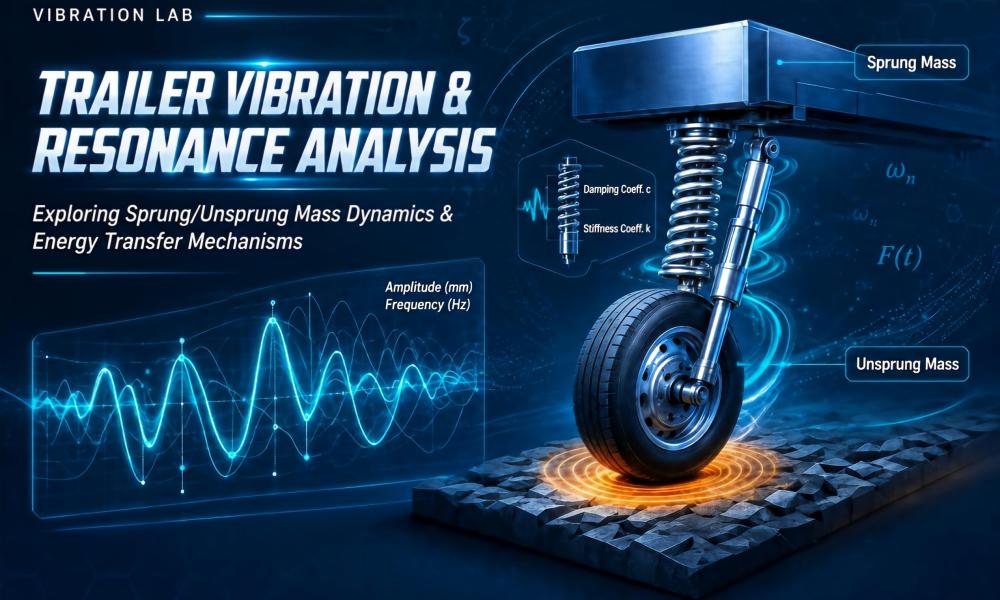
From a physics perspective, this is not merely a driving technique issue, but a classic manifestation of mechanical resonance and vibration dynamics. To truly understand and avoid this hazard, we must delve into the natural frequency, unsprung mass, and damping matching of the trailer system.
1. Natural Frequency and Resonance: The Invisible Killer
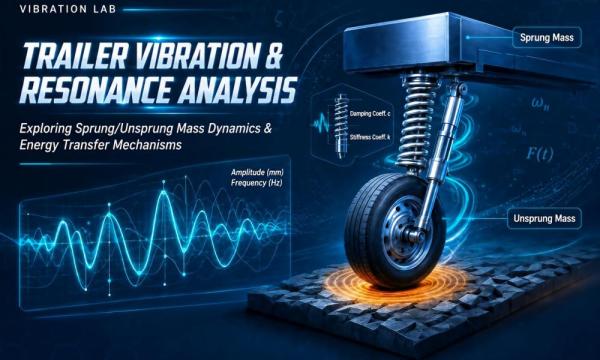
Every elastic mechanical system possesses a Natural Frequency—the frequency at which the object naturally oscillates when free from external interference. The trailer's suspension system, chassis frame, and tires collectively form a complex multi-degree-of-freedom vibration system.
While driving, road irregularities, minor tire imbalances, or crosswinds exert periodic external excitation on the system. If the frequency of these external excitations approaches or equals the natural frequency of the trailer's suspension system, Resonance occurs.
In a resonant state, the system's amplitude increases dramatically. Originally minor road bumps are amplified into severe body swaying. For a trailer, this energy superimposition forces the axles to endure dynamic loads far exceeding their design limits. This not only accelerates metal fatigue but may also lead to abnormal tire wear, suspension component failure, or even catastrophic rollover.
2. Unsprung Mass: The Key Variable Determining Handling and Stability
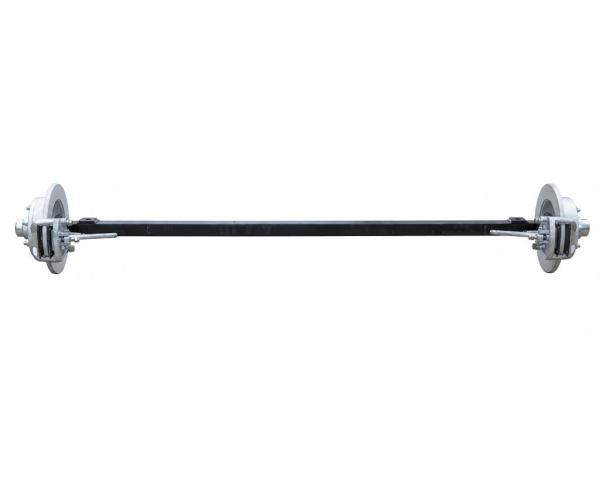
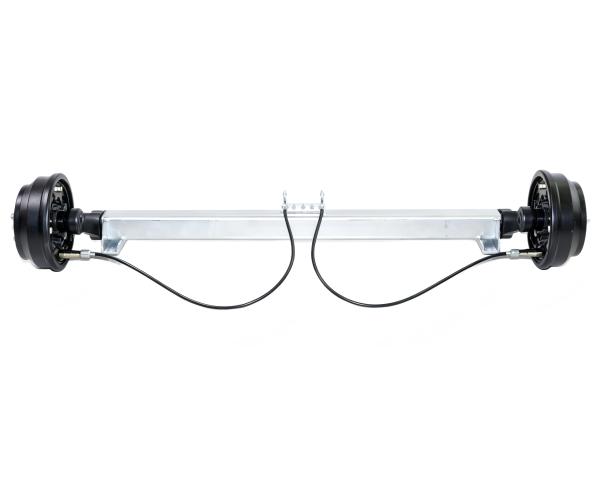
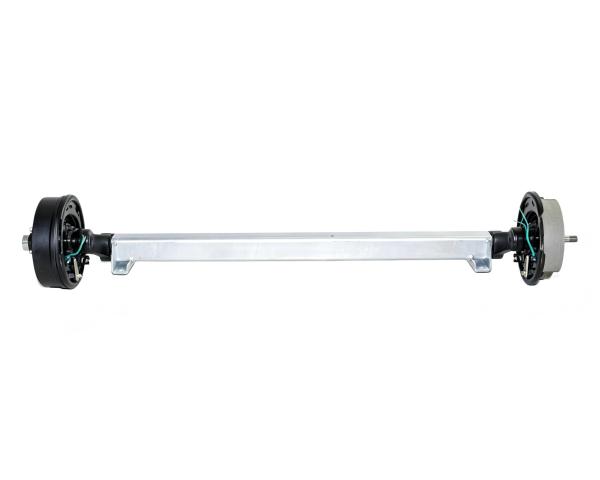
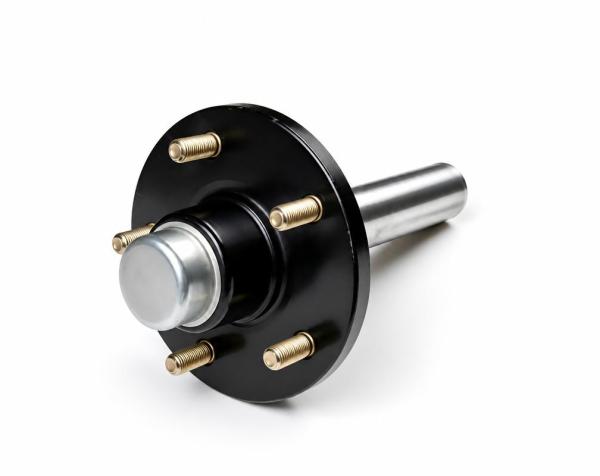
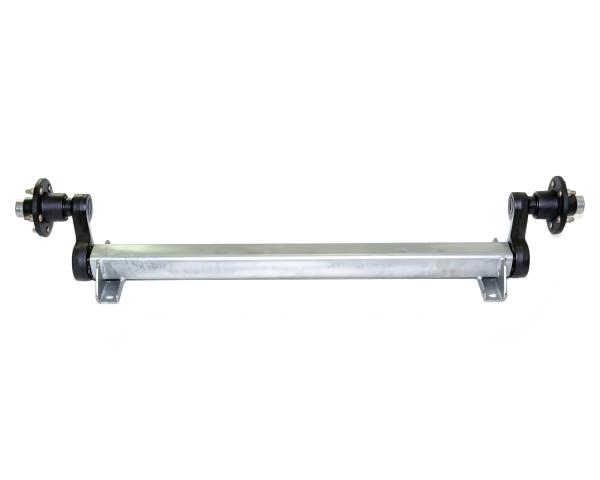
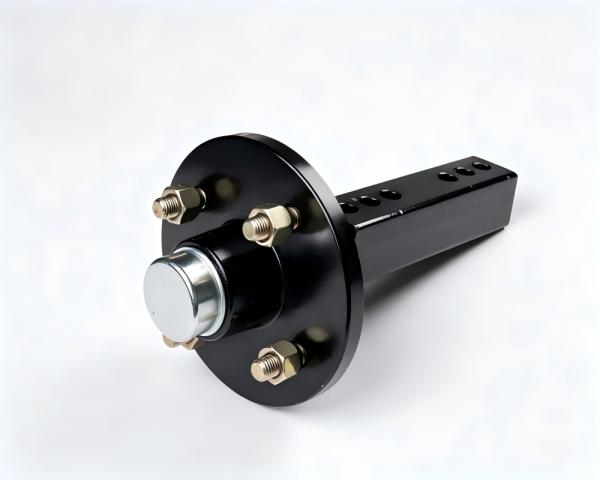
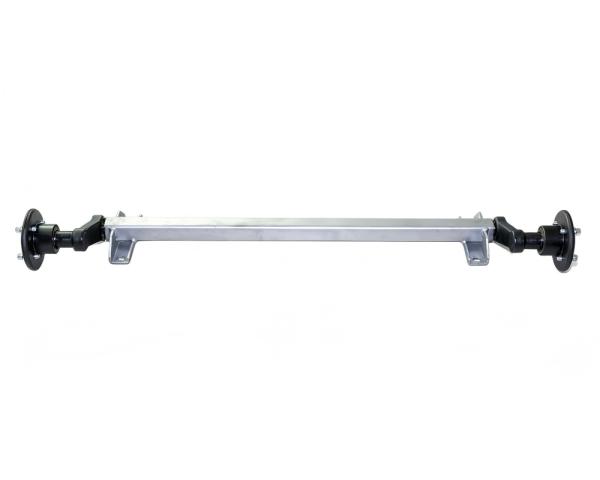
In vibration dynamics, Unsprung Mass is a crucial concept. It refers to the weight of the vehicle that is not supported by the suspension springs, primarily including the axle, wheel hubs, tires, brake drums, and a portion of the suspension linkages.
Unsprung mass has a decisive impact on a trailer's riding stability:
Response Speed and Traction: The smaller the unsprung mass, the lower the inertia of the wheels when encountering potholes, allowing them to follow road contours more rapidly and maintain ground contact. Conversely, excessive unsprung mass causes the wheels to "leave the ground" during bumps, instantly losing traction. This not only compromises braking performance but also intensifies impact loads on the suspension system.
Vibration Transmission: The greater the unsprung mass, the stronger the inertial forces generated by wheel hop. Consequently, more vibrational energy is transmitted through the suspension to the chassis and body, degrading ride comfort and increasing the fatigue risk for structural components.
Therefore, in the design of axles and wheel hubs, minimizing unsprung mass (for example, by using high-strength lightweight steel or optimizing hub design) while ensuring structural integrity is a core engineering challenge for enhancing the dynamic performance of trailers.
3. Damping and Weight Distribution: The Balancing Act to Break Resonance
Understanding natural frequency and unsprung mass is not enough; Damping and Weight Distribution are equally critical for controlling vibration.
The Role of Damping: The core function of shock absorbers is to dissipate vibrational energy. If damping is too low, the suspension will continue to oscillate after an impact, failing to decay rapidly; if damping is too high, the suspension becomes overly stiff, unable to effectively filter out high-frequency road vibrations, and instead transmits shocks directly to the axles and chassis.
Weight Distribution and Center of Gravity: The trailer's load distribution significantly alters the system's natural frequency. A center of gravity that is too high, or a load that is too heavy at the rear (i.e., "nose-light, tail-heavy"), lowers the system's stability threshold, making the trailer more susceptible to entering a resonant state. Proper weight distribution should ensure the center of gravity is positioned at an appropriate distance ahead of the axles and remains laterally balanced, providing sufficient restoring moment to suppress swaying.
Conclusion
Trailer vibration and resonance are not unpredictable "black magic," but physical phenomena that can be controlled through rigorous engineering calculations and rational component selection. From reducing unsprung mass to optimizing damping matching, and further to scientific weight distribution, every aspect is vital to driving safety and comfort.
For trailer manufacturers and users, understanding these underlying physical principles not only helps avoid the trap of "death wobble" but also enables more scientific and safer decisions when selecting axles, suspensions, and tires. After all, on the road, solid engineering is the only weapon to defeat the laws of physics.

 English
 Español
 Русский
 عربي