English
 Español
 Русский
 عربي
How to Select the Right Axle by Trailer GVM — A Practical Guide for Trailer Builders
trailer axles,hot-dip galvanized finish,trailer replacement axles,trailer spare parts,trailer torsion axles
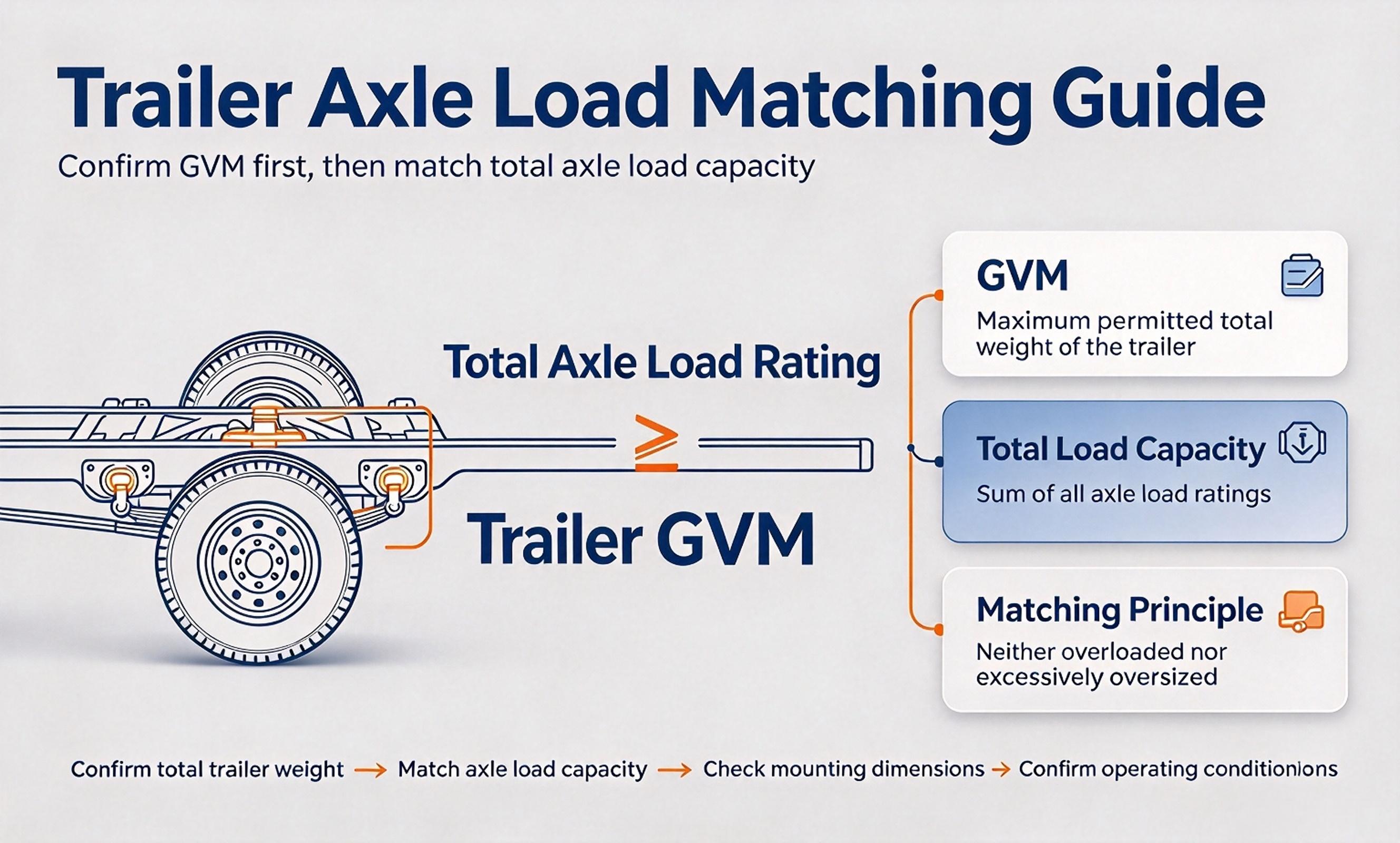
In the manufacturing of trailers, RV trailers, boat trailers, agricultural trailers, and special-purpose trailers, axle selection should not be based only on "how many kilograms it can carry." A suitable axle must match the gross vehicle mass, axle load distribution, wheel hub specifications, braking method, suspension structure, operating environment, and applicable regulations in the target market. For trailer manufacturers and converters, defining the GVM first and then determining the axle configuration is a reliable way to ensure safety, compliance, and long-term durability.
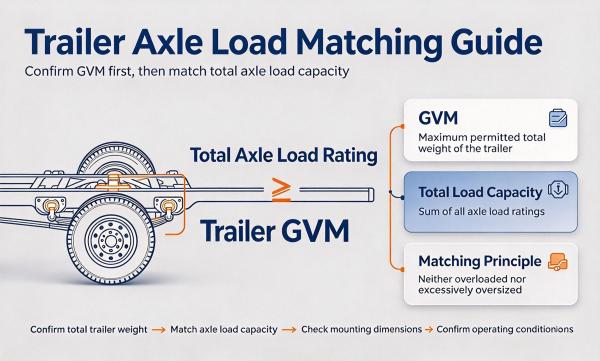
GVM generally refers to the maximum allowable total mass of the trailer in its fully loaded condition. For trailers equipped with a coupling, ATM and GTM should also be distinguished. ATM is the total mass of the fully loaded trailer when it is not connected to the towing vehicle, usually including the coupling download. GTM is the mass transferred to the ground through the axles when the trailer is connected to the towing vehicle. During axle selection, ATM alone is not sufficient. The actual axle load must be calculated, and the total rated capacity of all axles should cover the GTM with a reasonable safety margin.
Single-axle trailers have a simple structure and are commonly used for small utility trailers, light boat trailers, and light RVs. Twin-axle trailers offer higher load capacity and better running stability, making them suitable for medium-duty platform trailers, caravans, and boat trailers. Triple-axle or multi-axle trailers are often used for heavy-duty platforms, engineering trailers, and large boat trailers. More axles help distribute the load, but frame length, wheelbase, tire size, braking system, and turning clearance should also be considered.
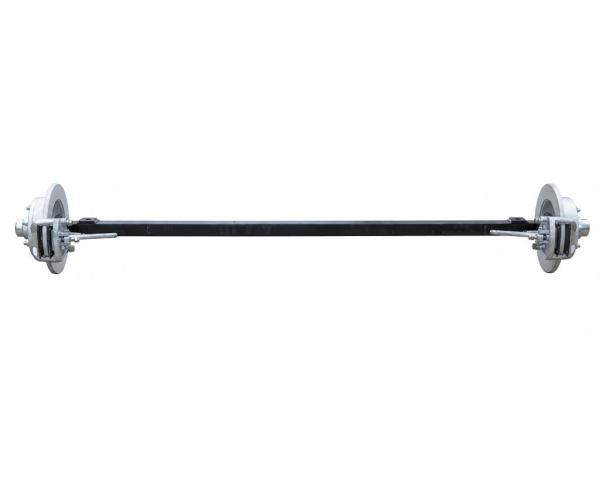
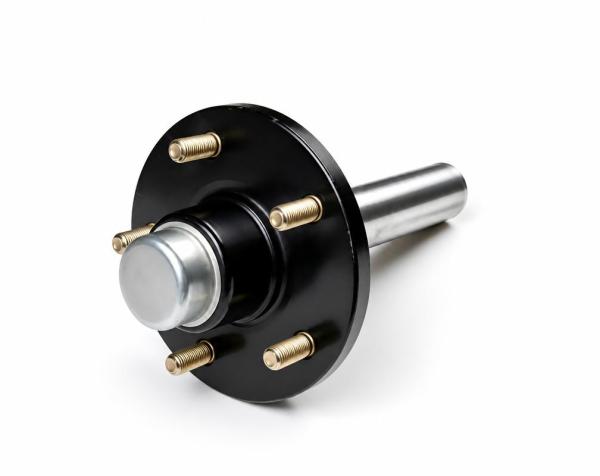
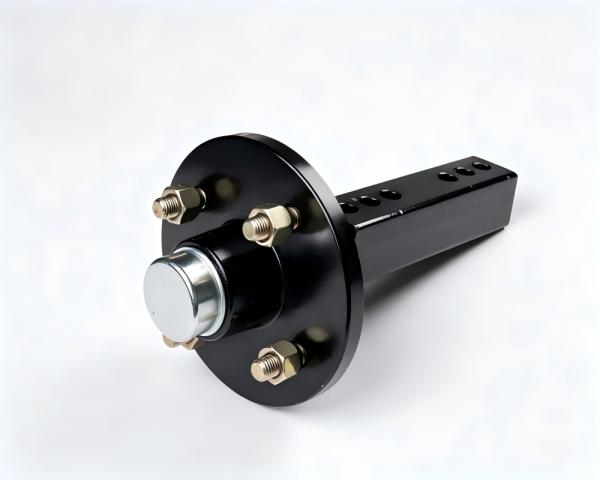
Wheel hub matching is equally important. Hub bolt pattern, rim size, bolt distribution, and brake drum or brake disc interfaces must be compatible with the axle specifications. If the hub and axle do not match, installation, braking performance, and long-term reliability may be affected even when the axle load rating is sufficient. Braking systems should also be selected according to target market requirements. Common options include mechanical brakes, hydraulic brakes, and electric brakes, while some light trailers may be designed without brakes.
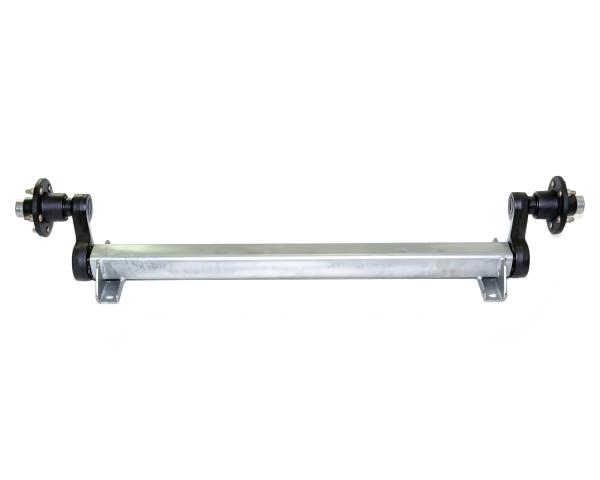
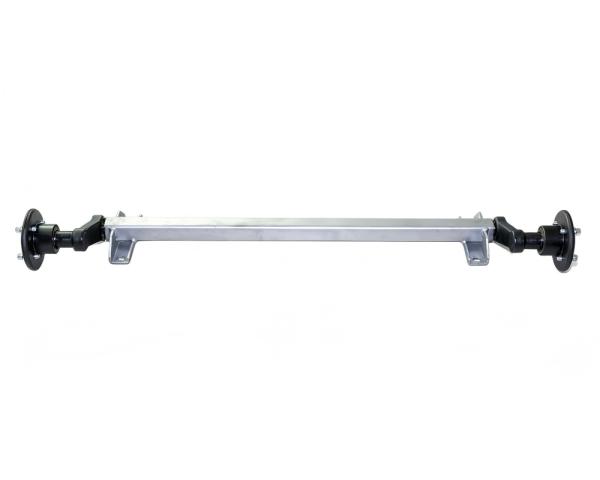
Operating environment also influences axle configuration. Trailers used in coastal areas, humid conditions, or long-term outdoor storage require better corrosion protection for axle beams and wheel hubs. Hot-dip galvanized axle beams generally offer stronger corrosion resistance and are suitable for boat trailers, coastal transport applications, and vehicles stored outdoors. Painted axles are more suitable for inland or relatively dry environments, or when initial appearance and cost control are priorities. Wheel hub surface treatment can be selected based on brand appearance, corrosion resistance level, and after-sales maintenance requirements.
From a manufacturing perspective, axle selection should also consider assembly convenience and consistency. The position of mounting brackets, spring seats, shock absorber interfaces, wiring positions, and welding quality all affect final assembly efficiency. For manufacturers producing trailers in batches, stable dimensional tolerances, clear installation references, and reliable packaging and transportation methods can help reduce on-site adjustment and rework costs.
A practical selection process can be summarized as follows: first determine the target GVM and coupling download ratio, then calculate the required axle load; next select the number of axles, axle type, rated capacity, wheel hub specifications, and braking method; finally confirm the surface treatment based on the operating environment and verify the regulatory requirements of the target market. Following this process helps trailer builders match axles to vehicle platforms more systematically and reduce safety risks and maintenance costs during later use.